Water on Hardwood Floors: What to Do in the First 48 Hours
Holiday cooking means heavy use of dishwashers, sinks, and ice makers, and a leak can soak hardwood quickly. Here is what to do right away and what to watch in the weeks after.
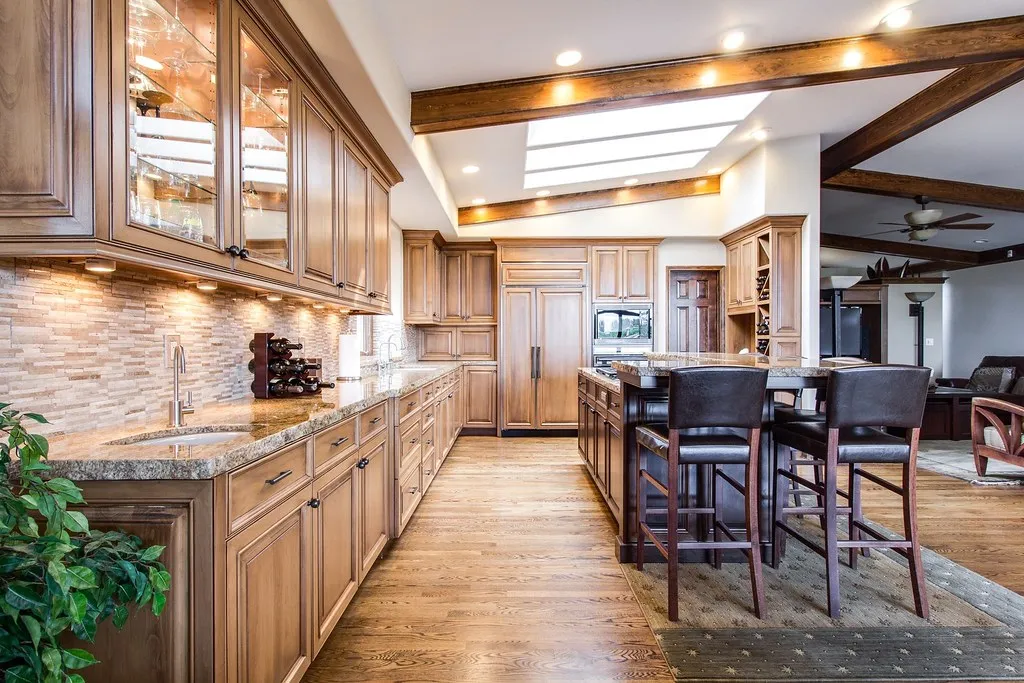
A slow drip from a dishwasher supply line, an ice maker leaking behind the refrigerator, a sink that overflowed while everyone was in the next room: water reaches hardwood in plenty of ways, and the holiday season, with its long days of cooking and cleaning, puts extra strain on kitchen appliances. What happens in the first couple of days after a leak often decides whether the floor dries out or needs repair.
Stop the water and stay safe first. Shut off the supply valve under the sink or behind the appliance, or the main water valve if you cannot find the source. If water has reached outlets, cords, or appliances, cut power to that area before stepping in. For larger leaks, a plumber needs to fix the source before anything else.
Remove standing water immediately. Use towels, a wet/dry vacuum, and mops to pull up as much as you can, including from the seams between boards. Lift wet rugs off the floor, since they hold moisture against the wood, and move furniture away from the damp area. If water reached a basement ceiling or crawlspace below the floor, deal with that side too; wood dries from both sides.
Then dry the space steadily. Run fans across the floor and a dehumidifier in the room, keep the home's heating and cooling running, and open windows only if the outdoor air is dry. Avoid blasting the floor with high heat, which dries the surface faster than the wood below and can cause cracking or new distortion. Do not sand, refinish, or nail down raised boards while they are still wet; most moisture-related movement has to settle before anyone can judge the damage.
Document as you go. Photograph the leak source, the wet floor, and any damage to cabinets or walls, and note the times. If you plan to contact your homeowner's insurance, those records will help, so check your policy and your insurer's process for water damage.
Watch the floor over the following days and weeks. Cupping, where the edges of boards rise above their centers, is the most common reaction to moisture, and mild cupping sometimes improves as the floor dries thoroughly. Buckling, where boards lift away from the subfloor, dark staining around seams or fasteners, a musty smell, or soft spots underfoot point to more serious damage or moisture trapped below. Moisture meter readings taken by a flooring professional show whether the wood and subfloor have returned to normal levels.
Repairs depend on what remains after drying. Light finish damage may need nothing more than a recoat. Boards with black stains, permanent cupping, or separated layers in engineered flooring usually need to be replaced, and blending new boards in often means sanding and refinishing a larger area around them. Acting quickly limits how far the damage spreads.
Once the floor has dried, an evaluation can sort out which boards can be saved and which need to be replaced. KC Hardwood repairs and refinishes hardwood for homes across the Kansas City metro, including floors recovering from a leak.