Thanksgiving Cooking on Hardwood: Grease, Hot Pans, and Dropped Dishes
Thanksgiving puts more cooking into one day than most kitchens see in weeks. Hardwood in the kitchen handles it well when grease, water, and heavy pans are dealt with before they can do damage.
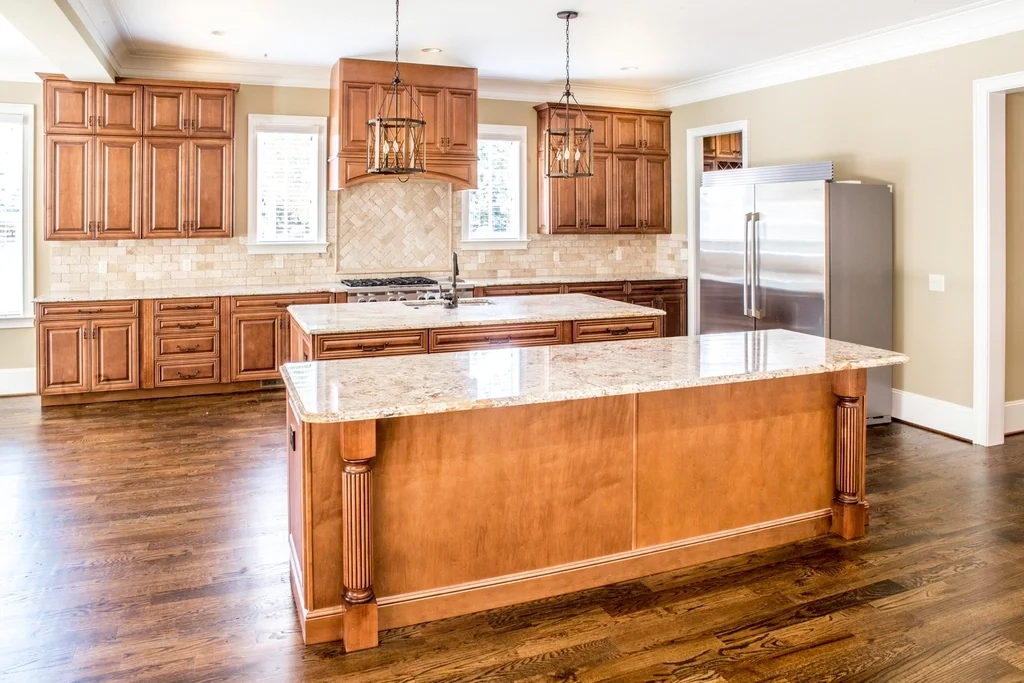
Thanksgiving is the busiest day of the year in a lot of Kansas City kitchens. The oven runs for hours, every burner is in use, extra helpers crowd around the island, and the dishwasher runs load after load into the night. A well-finished hardwood floor can handle a big cooking day. Most of the trouble comes from a few predictable places: the floor in front of the stove, the area around the sink and dishwasher, and wherever heavy pans get set down.
Grease is the first thing to watch. Splatter from the stovetop settles on the floor in front of the range as a thin film that is easy to miss and easy to slip on. Wipe it up as you go with a damp microfiber cloth and a cleaner made for your floor's finish. Kitchen degreasers, ammonia, and vinegar can dull or soften a hardwood finish, so keep them for the counters. A washable runner in front of the stove catches most splatter for the day, as long as its backing is safe for finished wood.
Heavy cookware is behind a lot of kitchen dents. A cast-iron skillet, a stockpot, or a full roasting pan dropped from counter height can dent even a hard species like white oak. Keep heavy pans toward the back of the counter, carry one at a time, and plan where the turkey will land before it comes out of the oven. A hot pan should never go down on the floor, even for a moment while you clear counter space, because it can mark the finish.
Broken dishes are the other hazard. A dropped glass dish or serving platter scatters sharp pieces that scratch the finish when people step on them or slide them around. Sweep up the pieces right away with a broom and dustpan, then vacuum the area on the hard-floor setting to catch small slivers before anyone walks through in socks.
The sink and dishwasher see more water than usual. Drips from the sink, a dishwasher door opened while it is still steaming, and wet hands reaching for a towel all put water on the same small area of floor. Keep a mat or a folded towel in front of the sink while you work, and wipe up standing water before it sits. After the day is over, look at the floor along the front of the dishwasher. A slow leak often shows up there first as boards that look darker or start to lift at the edges.
Mats help, but choose them with care. Anti-fatigue mats and rugs with rubber or vinyl backing can trap moisture, and on some finishes they leave discoloration if they stay in one spot for months. For a single day of cooking, a clean mat is fine. For mats that will stay down all winter, pick ones labeled safe for hardwood and lift them now and then so the floor underneath can dry.
Cleanup goes quickly in the right order. Sweep or vacuum first to pick up crumbs and grit, then damp-clean the kitchen with your hardwood cleaner, paying extra attention to the area in front of the stove. Do not flood the floor or use a steam mop. Once the floor is dry, look at it in good light for dents, dull patches, or scratches through the finish so you know what needs attention.
Kitchens wear faster than other rooms, and a busy holiday season tends to show it. KC Hardwood repairs damaged boards and sands and refinishes kitchen hardwood across the Kansas City area. If your kitchen floor comes out of Thanksgiving looking tired, we can help you decide whether it needs a repair, a recoat, or a full refinish.