Hardwood Near Fireplaces and Wood Stoves: Protecting Floors in Burning Season
Once burning season starts, the floor in front of a fireplace or wood stove takes more wear than anywhere else in the room. Most of the damage comes from a few predictable sources.
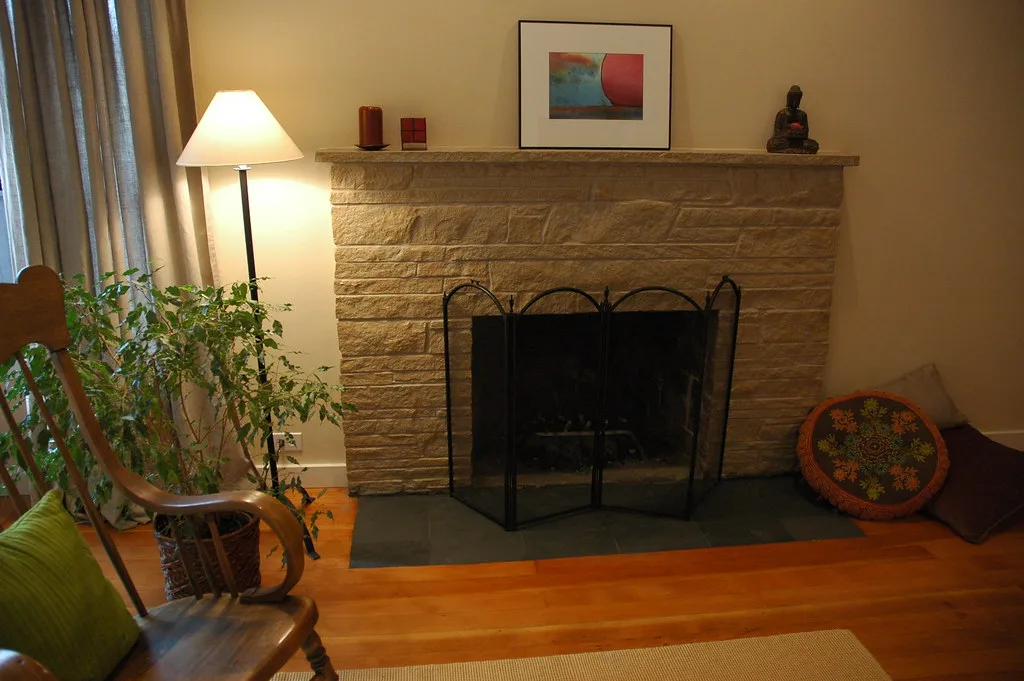
Cool November evenings are when many Kansas City households light the first fire of the season. If your hardwood runs right up to the hearth, that part of the floor is about to see sparks, ash, firewood, and a lot of dry heat. None of it has to leave a mark, but a little attention now keeps the floor in front of the fireplace from looking years older than the rest of the room.
Start with sparks and embers. Wood fires pop, and a hot ember that lands on a finished floor can leave a small black burn that goes through the finish and into the wood. Use a screen or glass doors whenever a fire is burning. The hearth in front of the opening should be deep enough that embers land on stone or tile instead of wood. Building codes set minimum hearth sizes for wood-burning fireplaces, so if yours looks narrow, have it checked.
A rug in front of the hearth adds protection if you choose it carefully. Wool resists burning better than most synthetic fibers, which can melt when an ember lands on them. Put a pad underneath that is safe for finished hardwood.
Ash needs care too. Lay a drop cloth on the floor before cleaning out the firebox, and carry the ash bucket out instead of setting it on the wood. Ash that spills is gritty and scratches the finish when it gets ground underfoot. Sweep or vacuum it up dry. Wet ash turns into an alkaline paste that can dull the finish.
Keep firewood off the bare floor. Store only a day or two of wood inside, in a rack or log carrier with a tray underneath. Bark, dirt, and splinters scratch the finish, damp logs can leave water marks, and wood brought straight in from the pile sometimes carries insects. Carry logs in instead of dragging them across the room.
A fireplace or wood stove also dries the air near it, so the boards closest to the heat often show wider gaps in winter than the rest of the room. Running a humidifier in that room helps. A freestanding wood stove should sit on the floor protector its manufacturer specifies, with clearances set by the installer according to the stove's instructions.
If a spark does land, look closely before doing anything. A light scorch that stays in the finish can sometimes be blended with a recoat. A burn that has blackened the wood usually means sanding the area or replacing the damaged boards. Avoid scraping at a burn with a blade or sandpaper, which widens the damaged area and makes it harder to blend. If you still have spare boards left over from the original installation, keep them, since matching species and color makes a board replacement much easier to blend.
KC Hardwood repairs damaged boards and refinishes hardwood for homeowners around Kansas City. If the floor in front of your fireplace has seen too many winters, reach out for an estimate.