Pulling Up Carpet? What to Expect From the Hardwood Underneath
Many older Kansas City homes have original hardwood hiding under wall-to-wall carpet. Before you pull it all up, here is what you are likely to find and how much of it can be fixed.
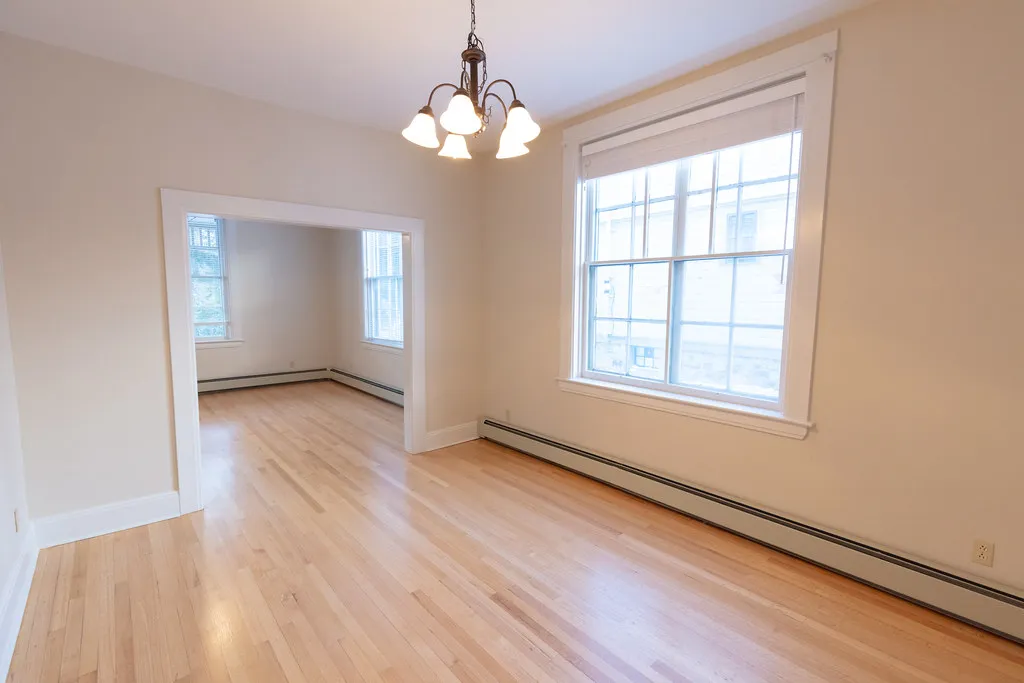
It is one of the more satisfying discoveries in an older house. You lift a corner of carpet in a closet or beside a floor vent and see oak strips underneath. Many homes built in the first half of the twentieth century had hardwood throughout, and much of it was later covered when wall-to-wall carpet became the fashion. Whether that floor can be brought back depends on what the carpet has been hiding.
Take a careful look before tearing anything out. Pull the carpet back in several places, such as a closet, a corner of each room, and the hallway, to see whether the hardwood runs through the whole house or stops at certain rooms. It is common to find hardwood in living areas and bedrooms but plywood or particleboard in rooms that were remodeled, around relocated heating registers, or where a wall once stood. Knowing that before the carpet goes to the curb makes the rest of the plan easier.
Along the walls you will find tack strips, thin wood strips with angled pins that held the edges of the carpet. They are nailed down, so removing them leaves a line of small holes around each room. Across the open floor, expect staples or small nails where the carpet pad was fastened. Staple holes are tiny and usually become nearly invisible once the floor is sanded and finished, but pulling hundreds of staples is tedious, and every one has to come out before sanding equipment touches the wood.
Pad residue is another common find. Old foam and rubber pads can break down and stick to the finish in a crumbly or tacky layer. Most of it comes off during sanding, though heavy residue may need to be scraped first. In some homes, the original finish under the carpet is in decent shape and the boards look surprisingly fresh. In others, the finish wore through along walking paths in the years before the carpet went down.
Stains say the most about the floor's future. Pet accidents and spills that soaked through the carpet often leave dark spots in the wood. Light discoloration near the surface may sand out, but black stains usually run deep into the board, and those boards typically need to be replaced with matching wood. Water damage near exterior doors, old radiators, or plumbing can show up as cupping or soft spots. Paint drips and drywall mud from past renovations are common as well and generally disappear with sanding.
Patches and gaps are the last variable. Where a register was moved or a wall removed, there may be an open gap or a patch of mismatched wood. Lacing in new boards, weaving matching pieces into the existing pattern instead of butting them in a straight line, keeps the repair from showing as a seam. It is also worth knowing that a solid floor can only be sanded so many times. A floor that has been refinished repeatedly over the decades may have limited wood left above the tongue, which a professional can check at a register opening or threshold.
A quick evaluation before demolition helps set expectations. A refinishing professional can look at representative areas, estimate how many boards may need replacing, and tell you whether the floor is a good candidate for sanding and refinishing or whether new flooring makes more sense in certain rooms.
Found wood under your carpet? Before the rest of it comes up, KC Hardwood can look at the condition and explain what sanding, board repairs, and refinishing would involve for your Kansas City home.