Hardwood Stairs: Refinish the Treads or Replace Them?
Stairs take concentrated wear, and they are hard to ignore when the floors around them are new or freshly refinished. Here is how to decide between refinishing and replacing the treads.
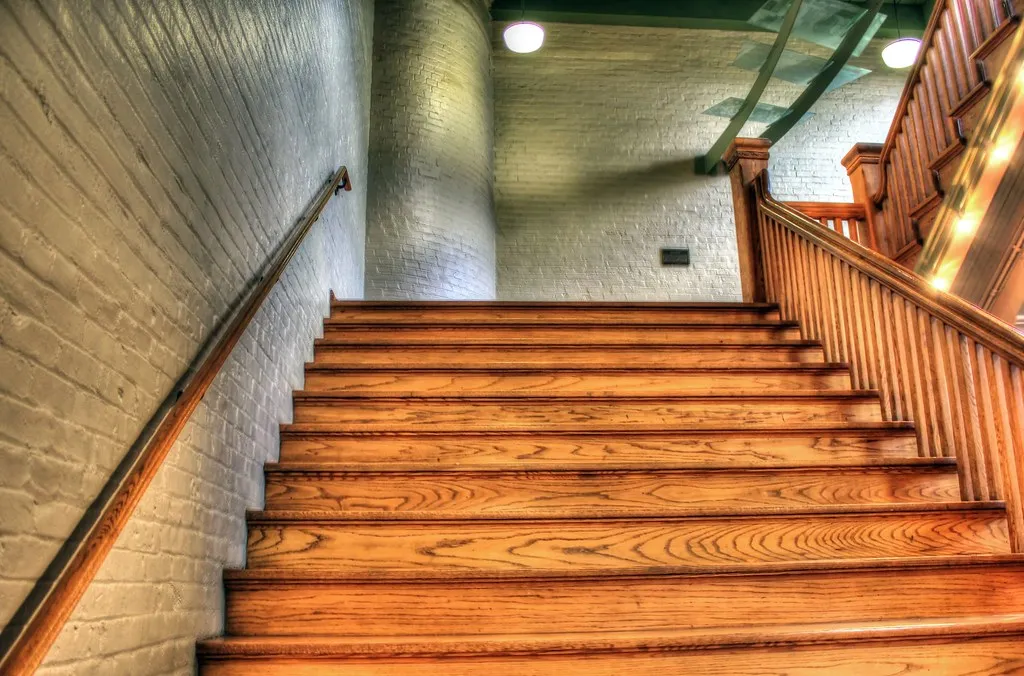
Stairs are where hardwood takes its most concentrated beating. Every trip up and down lands on the same few inches of each tread, especially along the front edge, called the nosing. Add a dog's claws, kids running down in socks, and furniture bumping its way to an upstairs bedroom, and stairs often look worn long before the floors around them. When floors elsewhere in the house are being refinished or replaced, the stairs become an obvious question: refinish them to match, or replace the treads?
Refinishing works when the treads are solid wood in reasonable condition. Scratches, worn finish, and dull paths across the center of each step usually sand out. Because stairs are sanded largely by hand and with small machines, and each step has edges, a nosing, and often a riser, refinishing stairs takes far more time per square foot than an open floor. That labor is worthwhile when the wood underneath is sound and the result can match the floor it connects to.
Replacement makes more sense when the wood itself is the problem. Deep gouges, cracked or split treads, nosings that are rounded off or chipped, treads that stay loose and creaky no matter what, and treads sanded so many times that little wood remains are all signs. Treads darkened by water or pet accidents can be difficult to restore as well. New treads also let you choose the species and finish to match new flooring, and in many cases they can be installed on the existing stair structure.
Carpet removal adds a twist. Carpeted stairs often hide treads that were never meant to be seen, such as construction-grade lumber, particleboard, or wood riddled with holes from the carpet installation. Pull the carpet off one low step first to see what is underneath before committing. If the treads are softwood or a material not designed to be finished, new hardwood treads or retrofit treads installed over the existing ones are the usual route.
Matching is the main design decision. If the stairs lead to a refinished or new hardwood floor, the treads should share its species, stain, and sheen so the connection looks intentional. Risers are often painted white or another contrasting color, which hides scuffs and lets the treads stand out. Railings and balusters may need refinishing at the same time; at the very least, they should be protected during the work.
Safety deserves attention too. Hardwood stairs can feel slicker than carpeted ones, especially in socks. A properly secured runner or individual tread covers can add traction, and it is worth asking whether a slip-resistant additive is available for the finish being used. Loose treads or wobbly railings should be fixed no matter which finish you choose.
If your floor project includes connected stairs, mention them when you request an estimate so they can be discussed along with the floors. KC Hardwood installs, repairs, and refinishes hardwood throughout the Kansas City metro, and planning the stairs and floors together is the easiest way to get a finish that matches from the front door to the top step.