Winter Entryways for Shops and Restaurants: Keeping Salt and Slush Off Wood and LVP
For many shops and restaurants, the busiest weeks of the year are also the weeks when customers bring in the most salt and slush. A plan for the entrance protects the floor and the people walking on it.
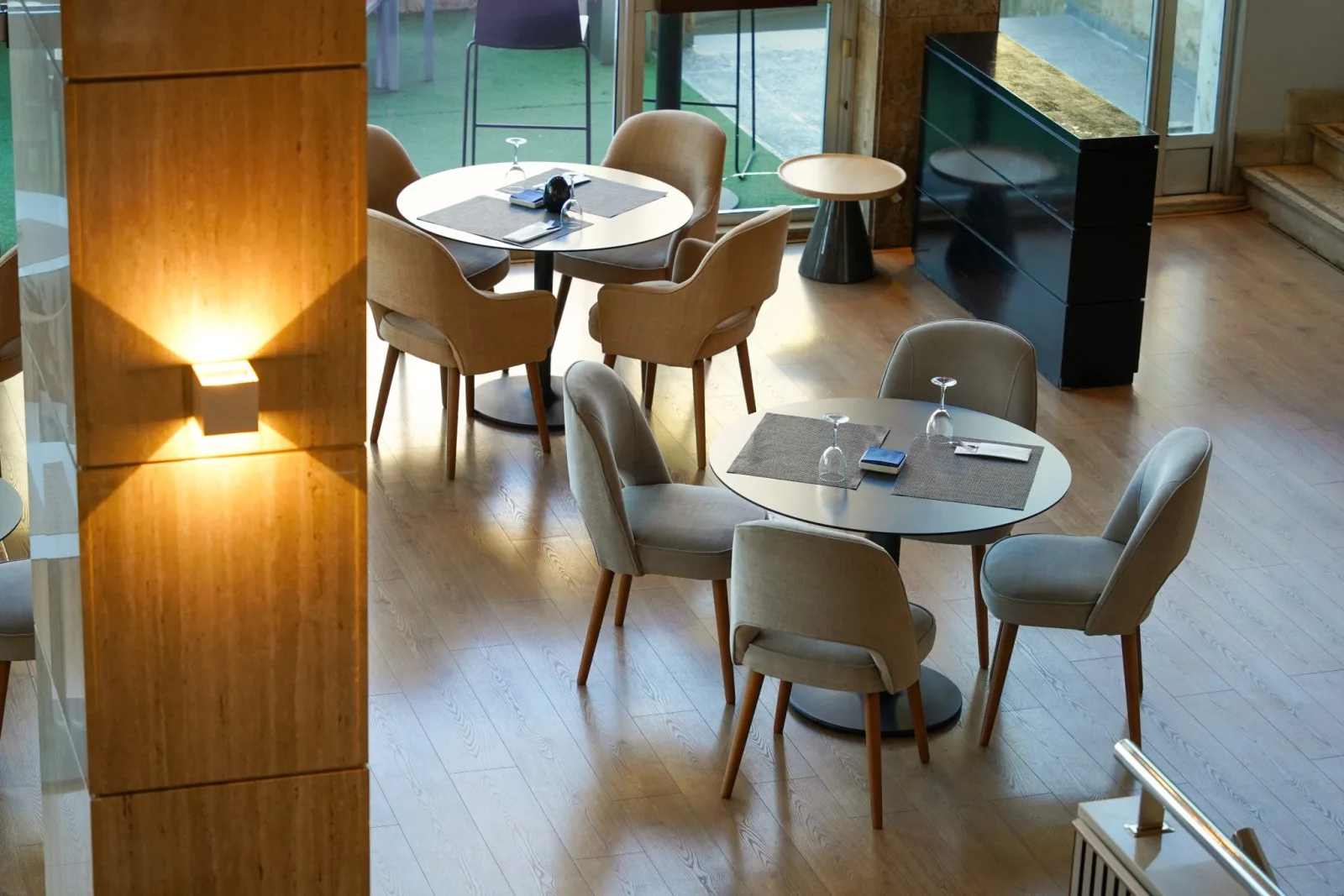
From Thanksgiving through New Year's, many Kansas City businesses see their heaviest foot traffic of the year, and much of it arrives on wet, salty shoes. In a store, salon, office, or restaurant with hardwood or LVP, the first stretch of floor inside the door takes most of the punishment. Winter wear builds faster than it does at home because hundreds of people can cross the same few feet in a single day.
Salt and ice melt cause two kinds of damage. The crystals are abrasive and scratch the finish as they get ground underfoot, and the residue left as slush dries leaves a white film that dulls the floor. Melted slush on a smooth floor is also a slip hazard. Standing water at the door can work into the seams of a wood floor and reach the edges of some LVP products.
Matting does most of the work. A common setup uses a coarse scraper mat outside to knock off snow and grit, then an absorbent mat inside that is long enough for people to take several steps on it. A single small mat gets soaked on a slushy day and stops working. Some rubber and vinyl mat backings can trap moisture or discolor floor finishes, so choose mats that are safe for the floor you have.
Mats only help when they are kept up. During storms, swap soaked mats for dry ones, and vacuum them often so they do not release grit back onto the floor. Many businesses use a mat service that rotates clean mats on a schedule, which takes one more task off the staff. Make sure mats lie flat, because a curled edge or corner is a trip hazard.
Adjust the cleaning routine for the season. Dust-mop the entrance area several times a day in bad weather to pick up grit before it gets ground in. For salt film, use a cleaner approved for the floor's finish and a damp, well-wrung mop instead of flooding the floor. Keep wet-floor signs near the door so they are out the moment the weather turns.
If the entrance already shows worn finish, gray traffic lanes, or discolored boards near the door, plan the repair for after the rush. A screen and recoat on commercial hardwood can often be done in sections or outside business hours. January and February are quieter months for many retailers and restaurants, which makes them a practical time for floor work.
When an entrance floor is due for replacement, treat the area just inside the door as its own zone. A recessed mat well, a harder-wearing product near the entry, or a well-planned transition can make the main floor last much longer. Size that zone for the traffic of the business's busiest weeks.
KC Hardwood installs and refinishes hardwood, LVP, and laminate for businesses as well as homes across the Kansas City area. If your entrance floor is showing winter wear, contact us for an estimate and we can plan the work around your busy season.