Cold Floors Over Crawl Spaces and Garages: What to Check Under Your Hardwood
If one room has a floor that feels cold every winter, it probably sits over a crawl space or an unheated garage. Those floors also tend to gap, squeak, or cup more than the rest of the house.
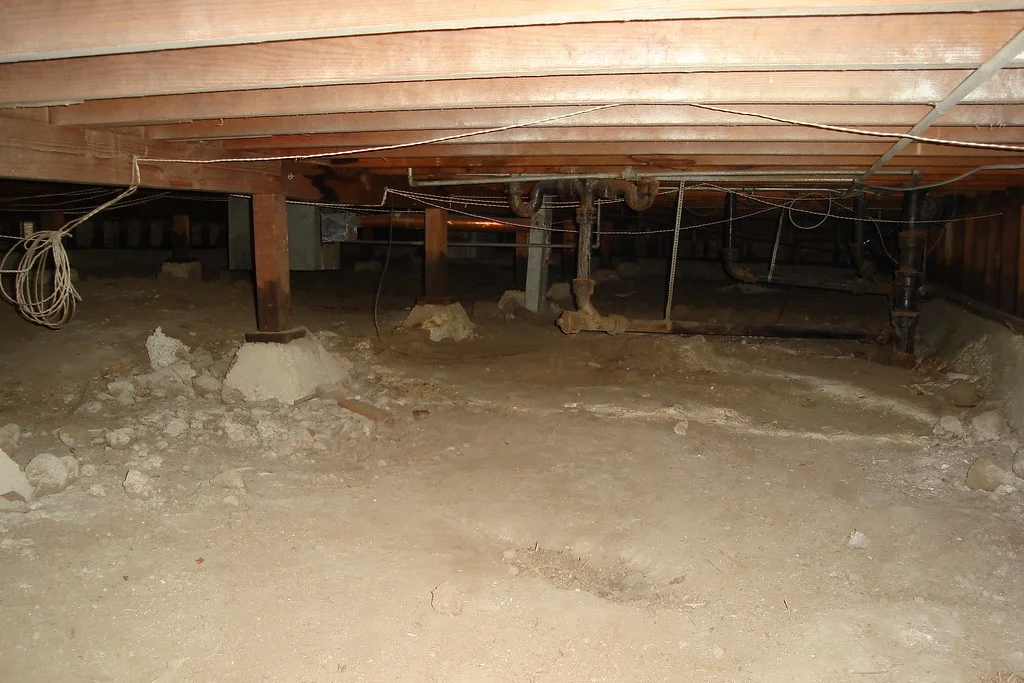
Many Kansas City homes have at least one floor that does not sit over heated space. Older houses often have a crawl space under part of the main floor, additions are frequently built over one, and bedrooms or bonus rooms often sit above an attached garage. When the first hard cold arrives in late November, those are the rooms where bare feet notice the floor first. The hardwood in them lives in different conditions from the rest of the house, and over time it usually shows.
Moisture does more to these floors than cold does. A crawl space with bare soil, poor drainage, or a torn ground cover can hold damp air under the floor while the heated room above stays dry. Boards that are wetter on the bottom than on top swell along their edges and cup. The same floor can also gap more in winter than the rooms around it, because the wood is caught between a dry room above and a cold or damp space below.
If the crawl space is safe to enter, start with a look from below. Check whether the soil is covered by a plastic vapor barrier, and whether that cover is still intact or has been torn and pushed aside. Look for standing water, damp soil, mold on the joists, or a musty smell. Notice whether there is insulation between the floor joists and whether it is still in place or sagging. Heating ducts that run through the crawl space should be connected and sealed at every joint.
Rooms over a garage have a different problem. On a January night the garage can be close to the outdoor temperature while the room above is heated, so the subfloor and the wood stay cold. If the garage ceiling was opened for a repair and never fully insulated again, the floor above will feel it. Snow melting off cars also adds humidity to the garage air, which is one more reason the ceiling between the garage and the room should be closed, insulated, and sealed.
Then look at the floor itself. Some winter gapping is normal in any Kansas City home, and boards usually close up again when humidity returns in spring. Pay closer attention if the floor over the crawl space or garage is cupped, with board edges higher than the centers, if its gaps are much wider than in nearby rooms, or if it squeaks, feels soft, or bounces in spots. Those signs usually point to conditions underneath rather than normal seasonal movement.
Fix the conditions before fixing the floor. Sanding a cupped floor flat while the moisture problem is still there can leave boards that crown later, once they finally dry. A torn vapor barrier, poor drainage, missing insulation, or a leaking duct should be corrected first, often by a contractor who handles crawl spaces, insulation, or HVAC. After that, the wood needs time to settle. Moisture readings on the boards and the subfloor show when the floor is ready for repair or refinishing.
Planning a new floor in one of these rooms? The subfloor and the space below are part of the job. Moisture readings, a flat and solid subfloor, and a vapor retarder where the flooring manufacturer calls for one all matter more here than over a heated basement. Engineered hardwood is often a better fit than solid boards over a crawl space or garage, because its layered construction moves less as moisture changes.
KC Hardwood installs, repairs, and refinishes hardwood floors across the Kansas City area. If one room's floor behaves differently from the rest of the house every winter, we can take a look and tell you whether the wood needs work now or whether the space underneath should be addressed first.